Communications and Marketing

News and Events

Safety, Health and Security Update – December 2025
December 12, 2025

As the Fall Term comes to a close, there are updates to share in advance of the new year. To ensure you’re prepared for the Winter Term, please take a few minutes to familiarize yourself with the following information:

Campus hours and closures

RRC Polytech will operate on holiday hours from noon on Dec 24, 2025, through Jan 4, 2026. To access the Exchange District Campus during holiday hours, students, staff and faculty must buzz in at a designated entrance. To access the Notre Dame Campus, enter through the east doors of Building C.

All campuses will be closed on Dec 25, 2025, and Jan 1, 2026.

Health Centre opening at EDC

We are excited to announce that the new Health Centre space will be opening at the Exchange District Campus (EDC) in the new year. As of January 5, the Health Services team at EDC will provide students and staff with a variety of health and wellness information for general interest, ongoing health condition maintenance, plus treatment for injuries and illness.

Services include mental health support, sexual health and teaching, assistance connecting to RRC Polytech and community resources and more.

  • Location: W103 – Roblin Centre, first floor of the William building
  • Hours of operation: Monday to Friday, 8:00 a.m. to 2 p.m.*

Walk-in, no appointment is needed! In most cases, your Manitoba Health or other provincial health card, or an equivalent health insurance card is not required. If you are referred to QDoc, a valid Manitoba, other provincial, or an equivalent health insurance card will be required.

*Please note that the EDC Health Centre hours will be adjusted in February. We anticipate that they will be expanded to 8:00 a.m. to 4:00 p.m., Monday through Friday.

Entry process at EDC

As shared in the Fall Safety, Health and Security Update, the entry process at EDC has been enhanced to provide an extra layer of security. Students, staff and faculty are now required to scan their RRC Polytech-issued ID card upon arrival.

Re-printing or obtaining your RRC Polytech ID

For those new to RRC Polytech and those returning to campus this Winter Term, please ensure that you have a valid RRC Polytech ID card. For more information on how to replace or obtain an ID card, visit rrc.ca/ID.

Students, staff and faculty can update their chosen name on HUB at any time. The Student Service Centre will also support students and staff at any point to have a new photo taken and ID card printed with their chosen name. A reprint fee is typically charged, but it will be waived for requests due to someone transitioning or similar changes.

Upgrades to Security kiosks

RRC Polytech is continuously improving the entry process at the Exchange District Campus, guided by feedback from students, staff, and faculty. Our priority is to maintain the safety, security, and confidentiality of everyone on campus.

In addition to installing privacy screens on the laptops at campus entry points, there are upgrades underway to Security kiosks leading up to and into the new year.

The upgraded kiosk will feature an area for scanning RRC Polytech ID cards and another that has partitions around the laptop used for student, staff and faculty verification. These enhancements are intended to improve privacy and security for all members of the campus community.

Thank you to everyone for their understanding as we adjust and enhance the entry process to best support the campus community.

Your feedback matters

RRC Polytech is committed to continually reviewing and improving safety and security measures to best support the campus community. Feedback is welcomed and can be sent to the Safety, Health and Security team at safety@rrc.ca. Input from the community is valued as we seek to make ongoing improvements to campus processes.
RRC Polytech’s Sustainable and Socially Responsible Procurement Program is powering positive progress

December 12, 2025

For immediate release:

Winnipeg, Manitoba, on Treaty No. 1 Territory  the lands of the Anishinaabeg, Ininiwak, Anishininwak, Dakota Oyate, and Denésuline, and the National Homeland of the Red River Métis – Grounded by the institution’s mission, vision, and values, RRC Polytech’s Sustainable and Socially Responsible Procurement Program is proving that purposeful, proactive spending and strong, inclusive supplier relationships are a pathway to positive change. In 2023, the province’s largest post-secondary for applied learning and research changed its collective approach to purchasing decisions – recognizing that with millions of dollars spent annually on goods and services, that every transaction has the potential to create cultural, social, environmental, and ethical benefits. 

“This program demonstrates the action required to live our commitments to Truth and Reconciliation; and embedding equity, diversity, inclusion, and accessibility into everything we do. This includes how we approach the procurement and purchase of goods and services as an institution. It also honours our pledge to pursue global sustainability goals,” said Jamie Wilson, Vice President, Indigenous Strategy, Research and Business Development at RRC Polytech.

“Procurement at RRC Polytech has become a catalyst for social and environmental innovation in Manitoba, and an example of how organizations can contribute to an inclusive and equitable economy.” 

The Polytech’s Sustainable and Socially Responsible Procurement Program is an adaptable and flexible strategy, supported by policy, that uses a weighted system of criteria to help remove barriers for diverse suppliers, including Indigenous-owned businesses while considering the overall long-term effect and influence that working with a potential partner can have.     

Traditional factors like price, quality, service and technical specifications are still considered in purchasing decisions but all employees are now compelled to look at each transaction and partnership through a more thoughtful and responsible lens and assess the lasting impact of our choices. 

“The bottom line will always matter, but by aligning our purchasing power with our values, we’re also making continuous strategic investments in companies, partners, and people who also believe in and are working towards elevating others and respecting the planet,” said Jade Karsin, Director of Procurement and Logistics at RRC Polytech. 

“Many of our staff members already approached decision-making this way, so this program simply formalizes the process to provide clear guidance and the proper tools for everyone, creating consistency across our campuses and making us a better community partner.”     

As a result, not only have the number of bids from Indigenous-owned companies grown dramatically, expanding competition and creating more equitable access to opportunities, but the actual Indigenous supplier spend at RRC Polytech has doubled since the program’s launch. In fact, RRC Polytech has spent $6.8 million with partially Indigenous-owned suppliers, representing a 157% increase in just under two years.   

A recent success story is a partnership with Parkwest Projects Ltd., a 40 percent Indigenous-owned commercial construction firm. Parkwest has successfully completed recent multimillion-dollar construction projects at the Notre Dame Campus, including the new Interdisciplinary Health and Community Services Simulation Centre, the Centre for Automation and Manufacturing Technology Transfer at the Price Institute of Advanced Manufacturing and Mechatronics, as well as some ongoing classroom and hallway upgrades.

Parkwest is determined to become Manitoba and Northwest Ontario’s preferred industry partner to work with based on professional project management and expert craftsmanship – and preferred employer to work for by offering extensive training opportunities and creating a supportive culture, which includes building a diverse workforce and choosing meaningful projects, many in remote northern communities.       

Parkwest Projects Ltd. logo

“When we are leading a project, we don’t want to just provide a building. We want to provide a service to our clients, an opportunity for the local community, and a facility that will last and provide the necessary services that the community needs,” said Tyler Clegg, President, Parkwest Projects Ltd.

“RRC Polytech’s approach fosters an incredible team environment, which is one of the most important ingredients to the delivery of a successful construction project, so their graduates are great hires. We love working with partners who are as passionate about making a difference as achieving the project’s initiatives and goals.” 

Another example is RRC Polytech’s recent collaboration with Narratives Inc., a local consulting firm hired to help create RRC Polytech’s new Indigenous Visual Identity. In addition to six of 10 team members having Indigenous backgrounds, Narratives appointed two of their experienced Métis designers and facilitators as team leads. With a strong understanding of the distinctions among First Nations, Inuit, and Métis Peoples, they supported the process by engaging respectfully across these diverse perspectives and helping ensure a wide range of Indigenous viewpoints were reflected in alignment with the Polytech’s commitment. 

The project not only amplified representation but also created a meaningful pathway for emerging Indigenous professionals by including an Indigenous student in RRC Polytech’s graphic design program as part of the project team. The investment in both the present and the future secured the bid for Narratives while showcasing the type of positive, community-centered impact that strategic procurement can make. 

To maximize early impact under the program, high-value procurement opportunities were initially prioritized, so now work will shift to expanding internal training and creating more tip sheets and tools to support lower dollar purchasers as well.   

To explain how businesses can maximize on opportunities with RRC Polytech, the Procurement and Logistics team developed supplier-facing communication material encouraging self-identification, and actively engages in Indigenous supplier outreach, through the Manitoba Métis Federation (MMF) Business Expo, Indigenous Chamber of Commerce and the Canadian Council for Indigenous Business. 

“We’ll continue to analyze the incoming data and seek the feedback of our partners to identify areas where we can improve our approach,” said Karsin. “But we’re proud of the initial impacts and confident that our purchasing decisions will have a ripple effect in communities across the province as we build trust and relationships with a more diverse network of suppliers, vendors, and partners.”  

Learn more rrc.ca/procurement

A culinary journey at the Embassy of Canada to Japan

December 10, 2025

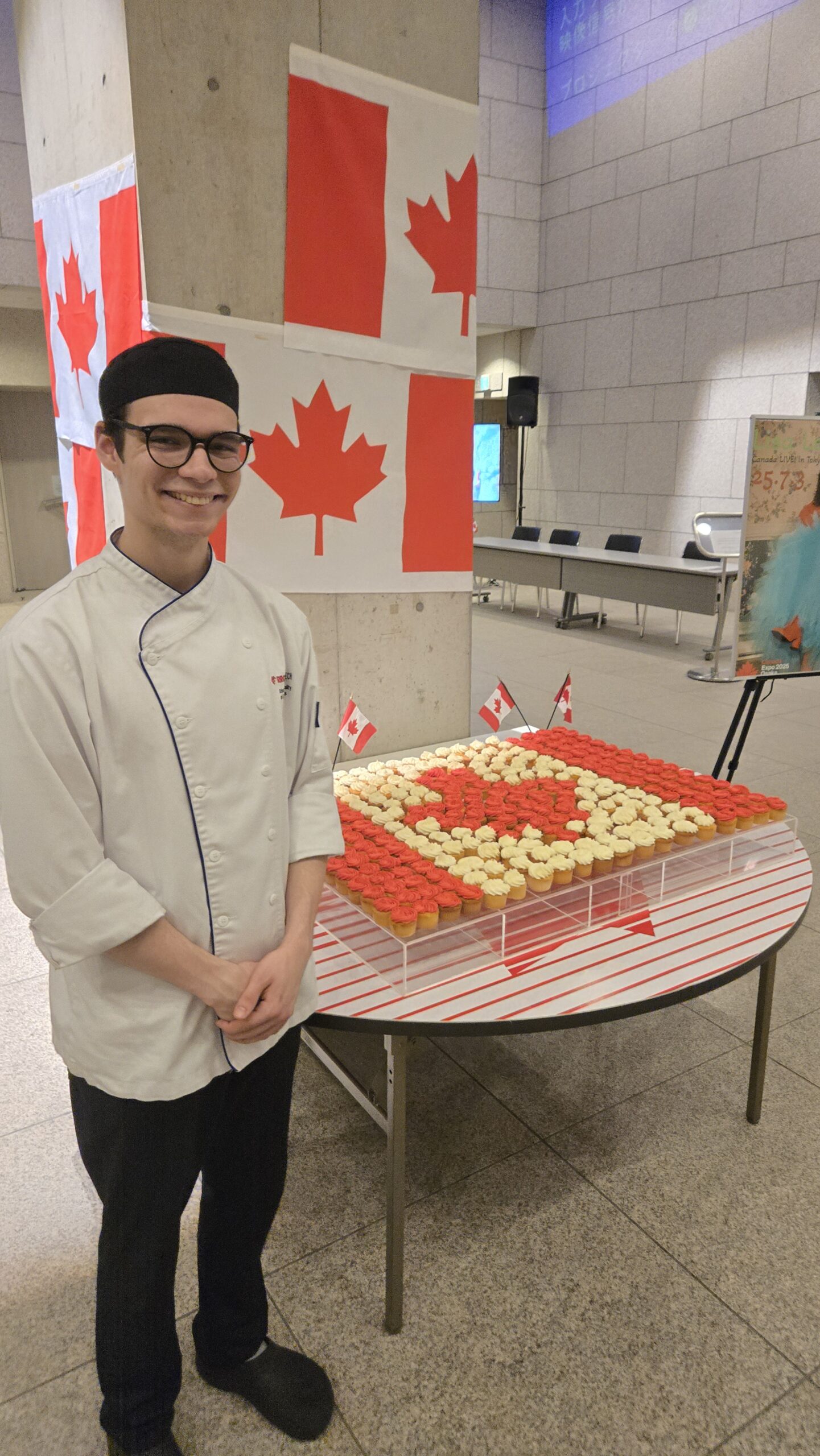
It’s not every day a chef gets the chance to cook for royalty, but that’s exactly what happened to Stanley (Stan) Fry during his work-integrated learning (WIL) through a co-operative education placement at the Embassy of Canada to Japan in Tokyo. On day five of his co-op, Fry prepared a meal for the Imperial Princess of Japan.

As an RRC Polytech Culinary Arts graduate (2025), Fry’s role at the embassy allowed him to cook for ambassadors and dignitaries from around the world. The position, working under the embassy’s Executive Chef from mid-May to August, was part of a pilot program through the Government of Canada and was highly competitive, with Fry selected from a pool of applicants across Canadian post-secondaries.

Fry’s time at the embassy was full of moments that shaped both his personal and professional journey. One of the most transformative experiences was his week at the World Expo in Osaka, working alongside fellow RRC Polytech Culinary Arts graduates, Gahbrielle Chow and Jayden Lowe.

Cooking at the Canadian Pavilion for the World Expo he gained invaluable insight into orchestrating large-scale events. “It’s made me much more consistent in everything I do,” says Fry, noting how the fast-paced environment pushed him to refine his skills and processes.

Close-up of salad on a white plate
Composed Waldorf salad that Fry prepared for the Imperial Princess of Japan.

During his placement, Fry also had the opportunity to manage the embassy’s kitchen for a week. He handled everything from purchasing ingredients and developing the menu to overseeing inventory. His week wrapped up with a four-course dinner for three guests, given just a day’s notice. This challenge strengthened his ability to adapt, plan, and execute under pressure.

“Creating perfect dishes has helped everything I do to undergo some pretty rigorous testing before being used. This has resulted in me gaining a few recipes that I know will work no matter the time or place,” shares Fry.

Reflecting on his journey, representing RRC Polytech and Canada on a global stage was a point of pride for Fry. “It’s a chance to show some of the most influential people where I grew up and how great Winnipeg really is,” he explains. Fry also notes that his culinary education was just the beginning, with real-world experience propelling him even further.

Fry’s advice to future students embarking on their work-integrated learning placements is simple yet profound, “Don’t be afraid to say you don’t know something. You learn more the more open you are about what you’re ignorant of.” He believes that openness to learning and curiosity are vital.

“Don’t let anybody stifle that curiosity, if you have it keep it above all else, and if you don’t then you are going to need to get it. That curiosity is the one thing that makes those 12-hour days easy.”

To Fry, maintaining curiosity is the key to growth and success, whether you’re serving royalty or tackling the everyday challenges of a busy kitchen.

From RRC Polytech to the world stage: two grads showcase their skills at the World Expo in Osaka

December 5, 2025

Gahbrielle Chow and Jayden Lowe both fondly recall one of their first classes during term one of the Culinary Arts program at RRC Polytech – garde à manger with Chef Melissa Hryb.

“Chef Hryb inspired me early on. She shared her experience in Shanghai cooking at the World Expo in 2010, opening my eyes to the opportunities and continuing to dream about travelling to cook around the world,” said Lowe. “Right away I was shown [by Chef Hryb] that I could be creative and do anything,” adds Chow.

Chow and Lowe share a passion for global cuisine and travelling. When the call went out for recent culinary arts graduates to cook for international delegates at the Canadian Pavilion at the World Expo, Chef Hryb nominated them both for the opportunity.

As a highly competitive process, it’s extremely rare that two students are chosen from one institution. Chow and Lowe were both selected.

“Watching two young females being chosen – especially in a male-dominated industry – for this opportunity is one of the most fulfilling things in my career,” said Hryb. Reflecting on her own experience cooking at the 2010 World Expo in Shanghai, she notes, “It’s a full circle moment and I’m grateful to give back by having recommended these two talented grads.”

The World Expo is a global event, held every five years, bringing together nations to showcase ideas and technologies aimed at solving some of the largest global challenges. It serves as a collaborative platform for creating a more sustainable and inclusive future.

This year’s World Expo ran from mid-April to mid-October in Osaka, Japan, where Chow and Lowe had the opportunity to showcase and hone their craft, cooking in the kitchen of the Canadian Pavilion for global dignitaries and guests.

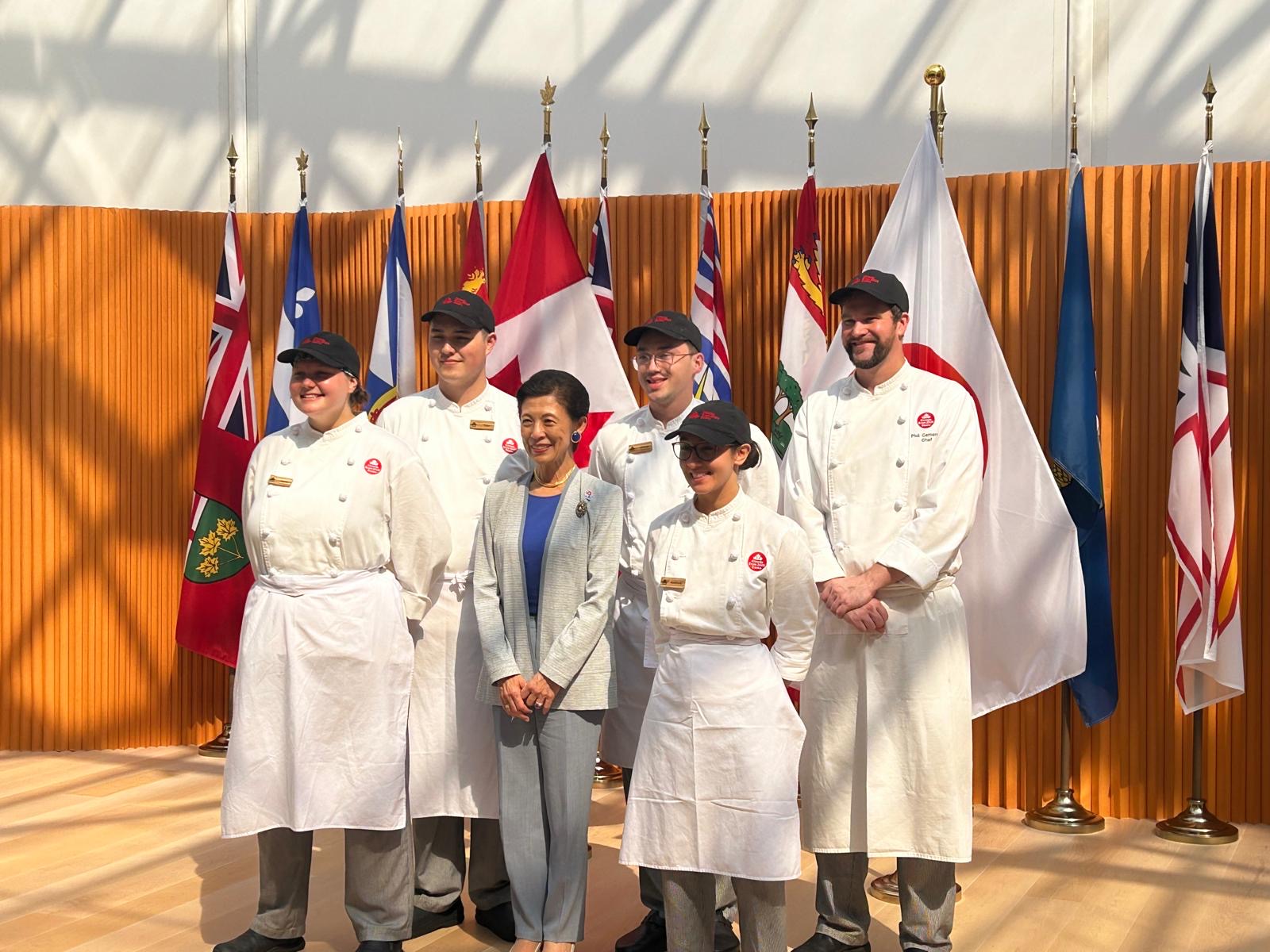
Five chefs posing for a photo with the Imperial Princess of Japan
Pictured: back row (L-R): Kaito Webb; Thomas Miazga, Chef Phil Cameron; front row (L-R): Jayden Lowe; Hisako, Princess Takamado; Gahbrielle Chow

Under the mentorship of Head Chef, Phil Cameron – Ottawa-based chef, chef-instructor and business owner – Chow and Lowe worked on a team alongside three other recent culinary arts grads from across the country.

Equipped with the skills and knowledge, work-integrated learning experience from co-op placements, plus front-of-house industry experience, Chow and Lowe were ready to collaboratively embrace the challenge of cooking for and hosting global representatives.

When they arrived at the expo in Osaka and familiarized themselves with the kitchen, some unexpected challenges arose, including availability of ingredients and adapting to a new culinary environment.

“You really have to adjust and adapt for the environment – it’s much more humid in Japan and humidity plays a big role in baking especially. In the beginning, we all had to learn and make adjustments,” said Chow on the team trialing recipes at the expo.

Chow and the team leaned on Chef Cameron, who has extensive experience cooking around the globe, including at the last World Expo in Dubai.

Alongside helping the team with technical side of adapting to a new culinary environment and new ingredients, Chef Cameron created space for them to be creative, encouraging everyone to try new things.

“This industry isn’t easy. [Those new to the industry] always need help and guidance from others with more experience – it’s important for me to show everything I can and be a mentor,” said Chef Cameron.

Chef Cameron, Chow and Lowe all emphasized that there’s no “average day” cooking for guests at the Canadian Pavilion. Every day is a new adventure – they could be making canapes for 100 people, or a sit-down dinner for 40.

Throughout the six months at the expo, the team tackled theme weeks such as Martimes Week and Quebec Week, and events focused on specific produce, including Manitoba Pork and Boar.

For Martimes Week, Lowe leveraged the expertise she gained in curing and smoking during her second co-op work placement in PEI at the Inn at the Bay of Fortune.

Close-up of canapes on a tray
PEI mussel canapes with foraged flowers.

“The expo gave me a chance to use the skills I gained during my second co-op, like curing meat alongside the butcher in PEI. Drawing on that experience, I made smoked mussels and created an oil from marigolds, inspired by what I learned about edible flowers,” said Lowe.

The goal is to highlight Canadian ingredients and dishes at the pavilion, but as Chow notes, “fusions are a nod to the multiculturalism and diversity of Manitoba, for example.”

One of Chow’s favourite dishes she created was a flounder fritter with lime salt, capers, and lemon aioli – a fusion dish that blends a fish native to Japan with Canadian elements.

As the expo came to a close, Chow and Lowe reflected on how their experiences not only helped sharpened their culinary skills but also strengthened their ability to collaborate and foster personal growth.

“The World Expo [was] a big an exciting opportunity and it certainly [was] overwhelming at times, but the team with the guidance of Chef Phil (Cameron) helped make the experience,” said Lowe.

Now that the expo is over, what’s next? Both Chow and Lowe still have the travel bug, setting their sights on “dreaming big,” and continuing to globetrot.

“The industry is about who you know, and I’ve been able to create some great connections. I’m inspired to keep applying to places and trying new things,” said Chow. While excited to keep travelling, Chow mentions that she’s ready to spend some time back in Winnipeg and try out new restaurants that opened during her time abroad.

RRC Polytech named a top research college in Canada – leading annual research rankings in innovative solutions and partnerships

December 5, 2025

Winnipeg, Manitoba on Treaty No. 1 Territory – the lands of the Anishinaabeg, Ininiwak, Anishininwak, Dakota Oyate, and Denésuline, and the National Homeland of the Red River Métis.

Led by a high volume of industry and community partnerships and innovative solutions resulting from completed applied research projects, RRC Polytech has once again been designated a top research institution in the country. Released earlier this week, Re$earch Infosource’s annual ranking of the country’s top 50 research colleges, reinforces RRC Polytech’s leadership role in the innovation ecosystem and its commitment to helping create economic prosperity for all Manitobans through collaboration. 

“These current rankings reflect RRC Polytech’s collaborative approach and industry and community relationships are resulting in practical solutions for our partners,” said Jamie Wilson, Vice President, Indigenous Strategy, Research and Business Development at RRC Polytech.

RRC Polytech is the only post-secondary in Canada that integrates research into its Indigenous Strategy portfolio, underscoring its unique commitment to social innovation and Indigenous growth alongside its strong industry focus. The data outlined in Canada’s Innovation Leaders 2025  suggests that local businesses are responding and eager to work together on projects that tackle complex global challenges.

RRC Polytech ranked first among Canada’s medium-tier colleges in completed research projects with 158 and second in total research partnerships with 150. Total industry research income jumped 21.7 percent in fiscal 2024, indicating an increasing trust among businesses in the Polytech’s reputation for consistency and productivity.

“Regardless of the size or scope of the project – from entrepreneurs in search of support to launch and grow their business idea to established enterprises looking to integrate AI, adopt automation or explore transitioning to low carbon – Manitobans can count on our technology, facilities, and expertise to provide affordable and effective problem-solving,” said Wilson.  

The applied research activities that connect staff, faculty, and students across all of RRC Polytech’s campuses are orchestrated by its Research Partnerships & Innovation (RPI) enterprise. RPI oversees an ever-expanding suite of leading-edge facilities and resources and coordinates projects that seek groundbreaking new processes and products.

For example, the award-winning Prairie Research Kitchen (PRK) has partnered with Protein Industries Canada (PIC) and the Manitoba Métis Federation (MMF) to explore agri-food opportunities and address barriers to food security in rural and remote communities in Manitoba.

The Centre for Automation and Manufacturing Technology Transfer (CAMTT), located at the Polytech’s Price Institute of Advanced Manufacturing and Mechatronics focuses on transitioning to Industry 4.0 technologies like robotics, automation, and AI.

From testing heat pumps to developing a diesel-to-electric conversion kit for school buses, research teams at the Building Efficiency Technology Access Centre (BETAC) and Vehicle Technology & Energy Centre (VTEC) work with various partners to demonstrate how electrification can save energy and support a greener, more sustainable future.

While RRC Polytech’s Technology Access Centre for Aerospace and Manufacturing (TACAM) has developed unique non-destructive inspection capabilities to support additive manufacturing quality assurance, aerospace composite evaluation, and even fire investigations in Manitoba. TACAM is also home to the province’s first full-scale Laser Powder Bed Fusion (LPBF) system, advancing high-quality prototyping, process optimization, and sustainable tooling innovations for companies such as Precision ADM and Dimatec Inc.

“Through an incredible breadth of applied research collaborations, we’re solving real-world problems for our partners at all stages, from growth and productivity to adopting new tech and creating more sustainable processes – all while training tomorrow’s workforce to be more adaptable and embrace emerging technology,” said Dr. Jolen Galaugher, Executive Director of Research Partnerships & Innovation at RRC Polytech.

“Our ongoing and determined efforts to build networks that share knowledge and resources will continue to increase our capacity to lead innovation in Manitoba and beyond, driving economic growth and prosperity for everyone.”

Learn more at rrc.ca/research.

About the Rankings
Re$earch Infosource annually ranks Canada’s top research colleges based on performance metrics such as research income, partnerships, and completed projects. Institutions are categorized by size to ensure accurate comparisons. RRC Polytech consistently ranks among the top performers in the medium-tier category, earning recognition for its research excellence, innovation, and industry impact.

Read more on this year’s theme Research for Canada’s future and the future of Canadian research  at Canada’s Innovation Leaders 2025

Vigil for National Day of Remembrance and Action on Violence Against Women

December 5, 2025

The following message contains content related to gender-based violence that may trigger powerful emotions to arise, especially for those with lived experience of violence and victimization. It is recommended you read the message when you feel safe and supported. Resources are available for those affected by gender-based violence, includingREES (Respect Educate Empower Survivors), a community for survivors, a24-7 Crisis Line,Gender-Based Violence Supportin Manitobaandadditional support services.   

Every year on  December 6, RRC Polytech recognizes the National Day of Remembrance and Action on Violence Against Women. This day serves as a solemn reminder to honour the 14 women who were murdered and those injured at École Polytechnique in Montréal in 1989. 

We remember: 
Geneviève Bergeron, Hélène Colgan, Nathalie Croteau, Barbara Daigneault, Anne-Marie Edward, Maud Haviernick, Maryse Laganière, Maryse Leclair, Anne-Marie Lemay, Sonia Pelletier, Michèle Richard, Annie St-Arneault, Annie Turcotte, and Barbara Klucznik-Widajewicz. 

These bright, talented women were daughters, sisters, friends, and colleagues. Young women whose lives and futures were stolen from them, just because they were women. Many of them were close to graduating or getting ready to step into their careers. Thirty-six years later, this loss is still felt, and it reminds us why action remains extremely urgent. 

Gender-based violence continues to hurt women, girls, and the 2SLGBTQIA+ community across Canada and around the world. One in three women (an estimated 840 million) will experience violence in their lifetime. These numbers are heartbreaking and unacceptable. 

December 6 is a day to remember and grieve, as well as a call to each of us to help create safer spaces where everyone can live free from violence and fear. 

Everyone — especially men and boys — plays a crucial role in ending gender-based violence; allyship starts with calling out sexism, supporting survivors, and challenging societal norms. Together, we can build a future that puts women’s safety and well-being at the forefront. 

RRC Polytech Vigil 
As part of our recognition, RRC Polytech will be hosting a vigil today to honour the lives of the 14 women and all those we’ve lost to gender-based violence. We invite all staff and students to join us at 10:00 a.m. in the Roundhouse Auditorium at Manitou a bi Bii daziigae. The vigil will also be available by livestream.  

The flags at the Notre Dame and Exchange District campuses will be lowered to half-mast today in recognition. 

16 Days of Activism Against Gender-Based Violence 
We encourage everyone to take part in the 16 Days of Activism Against Gender-Based Violence (Nov 25 – Dec 10). This campaign encourages us to become an ally by practicing the following actions: listen, believe, educate (yourself and others), speak out, intervene, and act. 

Additional ways you can support

Today, as we mourn the 14 women lost to gender-based violence, let us stand with all those in our community who have been impacted. Together, we share the responsibility to create a future where everyone—women, girls, and gender-diverse individuals—can live safely and freely. Let’s renew our commitment to end gender-based violence. 

December 6 may be a difficult day. Students can access support through Campus Well-Being. and staff through the Employee and Family Assistance Program. Please take care of yourselves and each other.

Full-Circle in Circuitry

November 24, 2025

Electrical Alum Alfred Thompson returns to teach program he took in Fisher River Cree Nation

Alfred Thompson walked into the classroom this past spring for the first time in 11 years – and this time, rather than a student, he was the instructor.

In 2014, Thompson took the Electrical program at the RRC Polytech campus in Fisher River Cree Nation. His interest in the industry grew from the problem solving and independence he gained while working hands-on and the satisfaction of seeing results firsthand. Today, he’s in Peguis First Nation, teaching 14 students in the same five-month Electrical program being offered in community from April – November 2025 with extra time to incorporate student success strategies, including Elder support and Teachings.

Thompson recalls that while taking trades courses in high school, building circuitry and making calculations came naturally to him and he enjoyed seeing how his work could be immediately applied – like setting up a simple motor and watching it spin or building a small circuit board where every connection worked as planned.

As a student at RRC Polytech, he says that the skills he cultivated and the knowledge he obtained contributed to how quickly he was hired after graduation. He gained a strong foundation in electrical safety, mathematics, and residential wiring while developing practical skills in troubleshooting, blueprint reading, and applying the Canadian Electrical Code – skills that prepared him for both industry work and, eventually, teaching.

Thompson worked in Fairford for a local electrical company for a few years before moving on to AAA, where he continued as an electrician. His career progressed to construction, where he traveled hours by car and by plane to work in northern communities installing electrical systems in new buildings and maintaining or repairing existing wiring.

Thompson credits a friend of his for referring him to the job posting with RRC Polytech to teach the very same program that he had taken 11 years earlier.

“[Teaching is] pretty good – I’m myself around the students now. That first day, though, I was practicing before, and I was like, ‘oh man, I’m really gonna just go talk like this in front of other people.’ I was so nervous,” said Thompson.

Thompson recounts that while he was considering how to approach teaching, he realized that it was more than just explaining how to solder wires to a circuit or how to navigate issues within an electrical system – teaching involved an entirely new skillset.

“I had to think back on how my own teachers did it to really get down to it, then it all made sense. I started just laying down that knowledge,” said Thompson.

Thompson shaped his teaching approach to focus on clear, step-by-step instruction, hands-on practice, and connecting theory to real-world applications based on reflection of his own experiences as a student.

He started his first classes with safety basics and moved into the code book, introducing one concept at a time before applying mathematical principles to assignments and projects. Thompson recalls how, in demonstration, he had taken a piece of paper and drawn a step-by-step visual for wiring a plug, which he had the students duplicate in their own drawings. From that simple demonstration to now, when the class is in the full swing of their projects, Thompson says the students have built the skills to tackle their work with great proficiency. Seeing those students succeed in their studies, like he had 11 years ago, fills Thompson with confidence.

Electrical student Christian Guillard said that joining the program in Peguis was a spur-of-the-moment decision when he was considering new opportunities for professional training.

“I have a background in physics so I was more familiar with theory than practice. I’ve found that Alfred’s good at explaining and demonstrating the practical application of electrical systems – the classes started slow at first but now we’re doing weekly tests to assess where we are,” said Guillard.

Earlier this fall, he developed blueprints for a bedroom and closet to map out the wiring and receptacles – a project he worked on while appreciating the convenience of studying close to his home in Peguis.

Thompson is optimistic about the future and noted that he would be glad to continue teaching if the opportunity remains at RRC Polytech. Alternatively, he says that he can envision heading back to construction or potentially opening his own business.

Being close to home is a huge factor in Thompson’s career – he has two young boys, two- and three-years-old, waiting for him at home in Fairford. Thompson says that when he was working construction, he could spend up to ten weeks away from home in remote communities to bring home a pay cheque. These days, he stays in a teacherage in Fisher River Cree Nation after work Tuesday through Friday, and from Friday to Monday, he has the full days with his sons in Fairford.

For Thompson, the journey from student to instructor has come full-circle. It blends his technical expertise, hands-on experience, and personal insight into a teaching approach that equips students with the skills they need and gives him the opportunity to stay close to family. Whether in the classroom or the field, Thompson plans to continue to build on the lessons of his past while helping guide the next generation of electricians.

RRC Polytech and Okanagan College win national innovation award for collaborative applied research

November 21, 2025

The BC Beverage Technology Access Centre (BC BTAC) at Okanagan College, in partnership with the Prairie Research Kitchen (PRK) at RRC Polytech, has been recognized with a national innovation award for excellence in applied research and industry collaboration.

The two Technology Access Centres (TACs) received the Most Impactful Interactive Visit Award at the 2025 TAC Innovate Awards hosted by Tech-Access Canada in Quebec City last month. The award recognizes BC BTAC and PRK’s collaborative work with a Métis-owned microbrewery in Winnipeg, Manitoba, which sought to create a high-quality, non-alcoholic craft beer.

“This award highlights how well our Technology Access Centres have worked together with industry,” said Karin Grosstessner-Hain, Manager of the BC Beverage Technology Access Centre. “Both teams demonstrated incredible adaptability, knowledge and impact in applied research. I’m proud of the value our TACs are bringing to the economy — across provinces and sectors.”

The collaboration delivered technical and strategic impact for the microbrewery, helping them move toward commercialization while expanding their internal research capacity. For BC BTAC and PRK, the project also created a replicable model for cross-TAC collaboration, integrating sensory, analytical and process expertise across regions.

“This national recognition underscores the strength of applied research at Okanagan College and the value of collaboration across Canada’s Technology Access Centres,” said Mary Butterfield, Director of Applied Research at Okanagan College. “By combining expertise across institutions, our teams are helping industry partners innovate and grow while creating meaningful applied learning opportunities for students.”

The initiative also provided hands-on research experience for a RRC Polytech Life Sciences co-op student and strengthened BC BTAC’s growing portfolio in non-alcoholic beverage research and development.

“Cross-provincial partnerships are essential for driving innovation and creating solutions for Canadian businesses on a local, national and international scale,” said Dr. Jolen Galaugher, Executive Director, Research, Partnerships & Innovation at RRC Polytech. “By combining the complementary expertise of two TACs, we not only collaborated with a Métis-owned microbrewery to explore advanced dealcoholizing technologies but also created a replicable model for national collaboration. This project is an important example of how students bring new energy and ideas to the table while gaining hands-on research experience, expanding their learning through real-world projects.”

Creating partnerships to support local businesses aligns with Okanagan College’s mission to transform lives and communities. The College has several research projects underway designed to help communities and local businesses solve real-world problems.

“I want to congratulate everyone involved in this award, which acknowledges the strong work that went into supporting a local business through research and development,” said Samantha Lenci, Vice President Academic at OC. “Okanagan College is here to work in partnership to find innovative solutions to real world problems.”

RRC Polytech hosts provincial announcement at the Simulation Centre

November 20, 2025

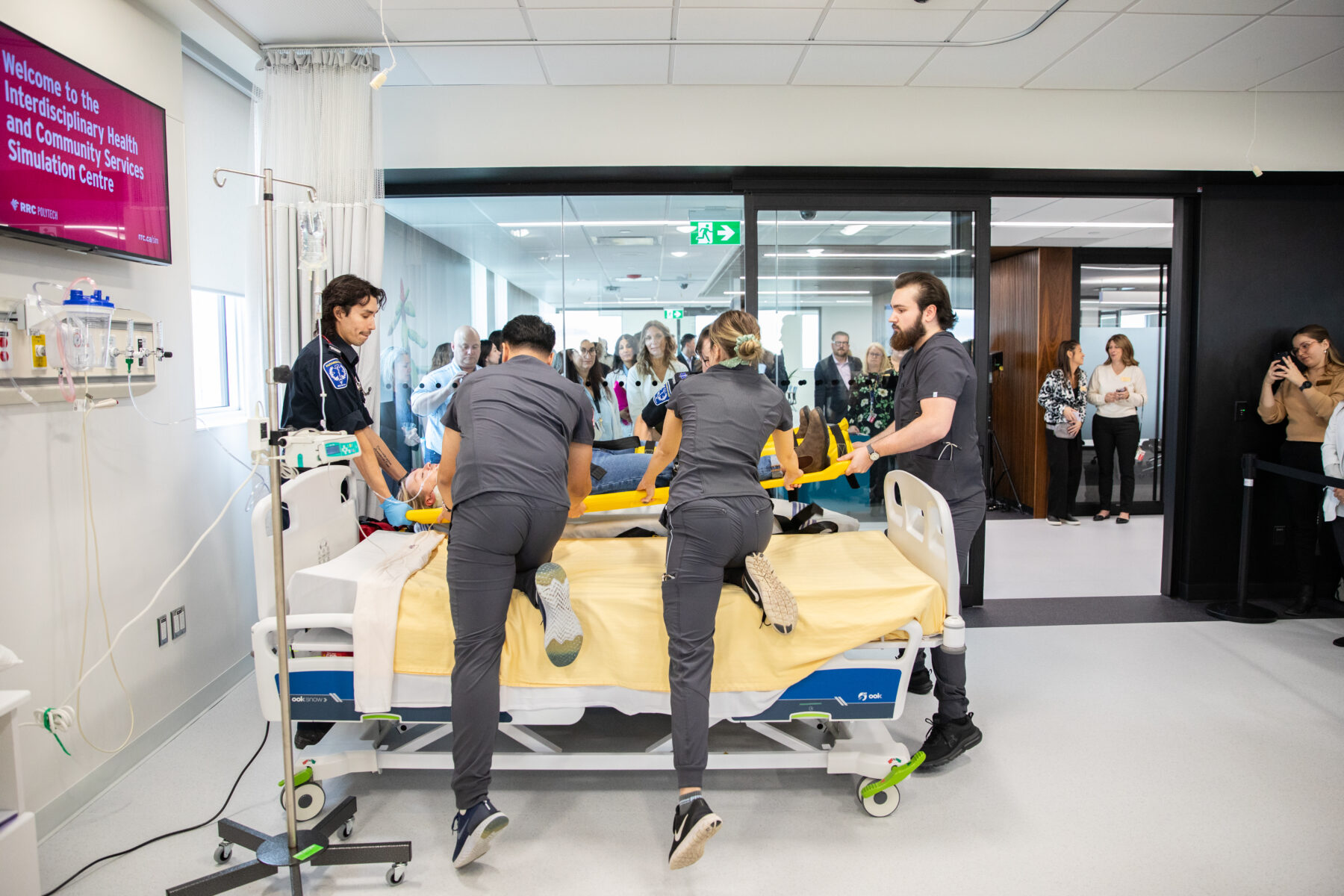
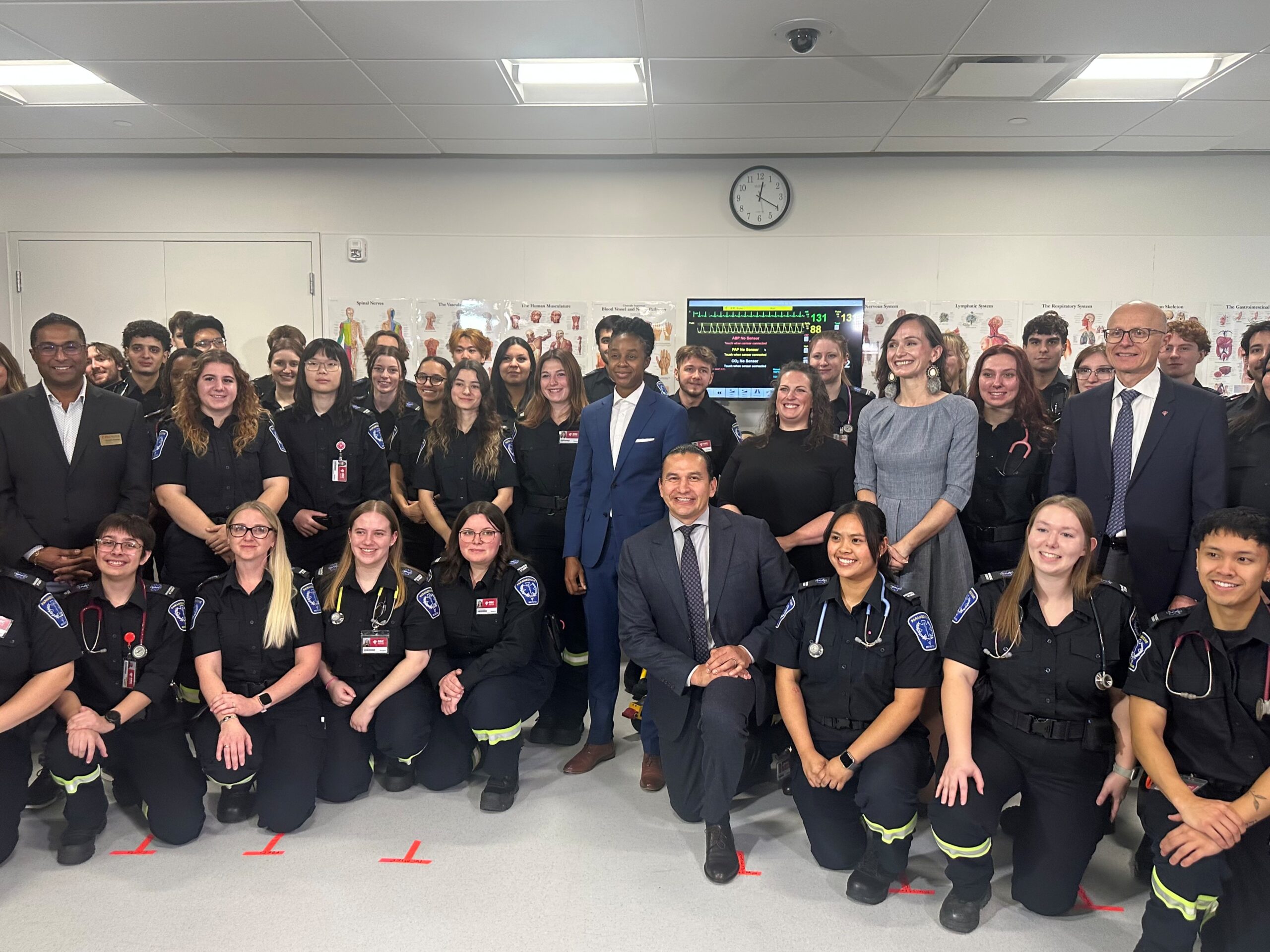
Yesterday, RRC Polytech was pleased to host a health press conference with the Premier of Manitoba, Wab Kinew, the Minister of Advanced Education and Training, Renée Cable, and the Minister of Health, Seniors and Long-Term Care, Uzoma Asagwara, in the Interdisciplinary Health and Community Services Simulation Centre.

The event highlighted RRC Polytech’s Primary Care Paramedicine students, and celebrated the program being at capacity this fall thanks to a new stream of students entering the program directly from high school.

RRC Polytech President and CEO, Fred Meier spoke about our role to ensure more students have access to training opportunities and support here, so when they enter the workforce they can do so with confidence, knowing they have a solid foundation of skills behind them and they are ready to make an immediate difference.

“At RRC Polytech, we’re committed to removing barriers and creating new pathways so more Manitobans can access the training they need to build meaningful careers in health care,” said Fred Meier, president and CEO, RRC Polytech. “By working with our partners in government and community, we’re expanding programs and delivering education in communities across the province, as well as strengthening the quality of training through the use of our Simulation Centre at our Notre Dame Campus in Winnipeg. Paramedics are crucial front-line health workers and we are proud to be able to offer training that prepares them to be leaders across the province; from the classroom to controlled simulations, and then on work placements as they prepare to start their careers.”

Thank you to the School of Health Sciences and Community Services, the Paramedicine program, and the students who helped support the event and visit.

Premier Wab Kinew shakes hands with Year 1 and Year 2 Primary Care Paramedicine students lining the halls to welcome him.
RRC Polytech President and CEO Fred Meier speaks from podium in the Simulation Centre with Primary Care Paramedicine students standing behind him.

RRC Polytech showcases commitment to Truth and Reconciliation at Fall Convocation with new Indigenous stoles and visual identity 

November 18, 2025

Graduates wearing caps and gowns are seated, watching a speaker on stage in front of them.

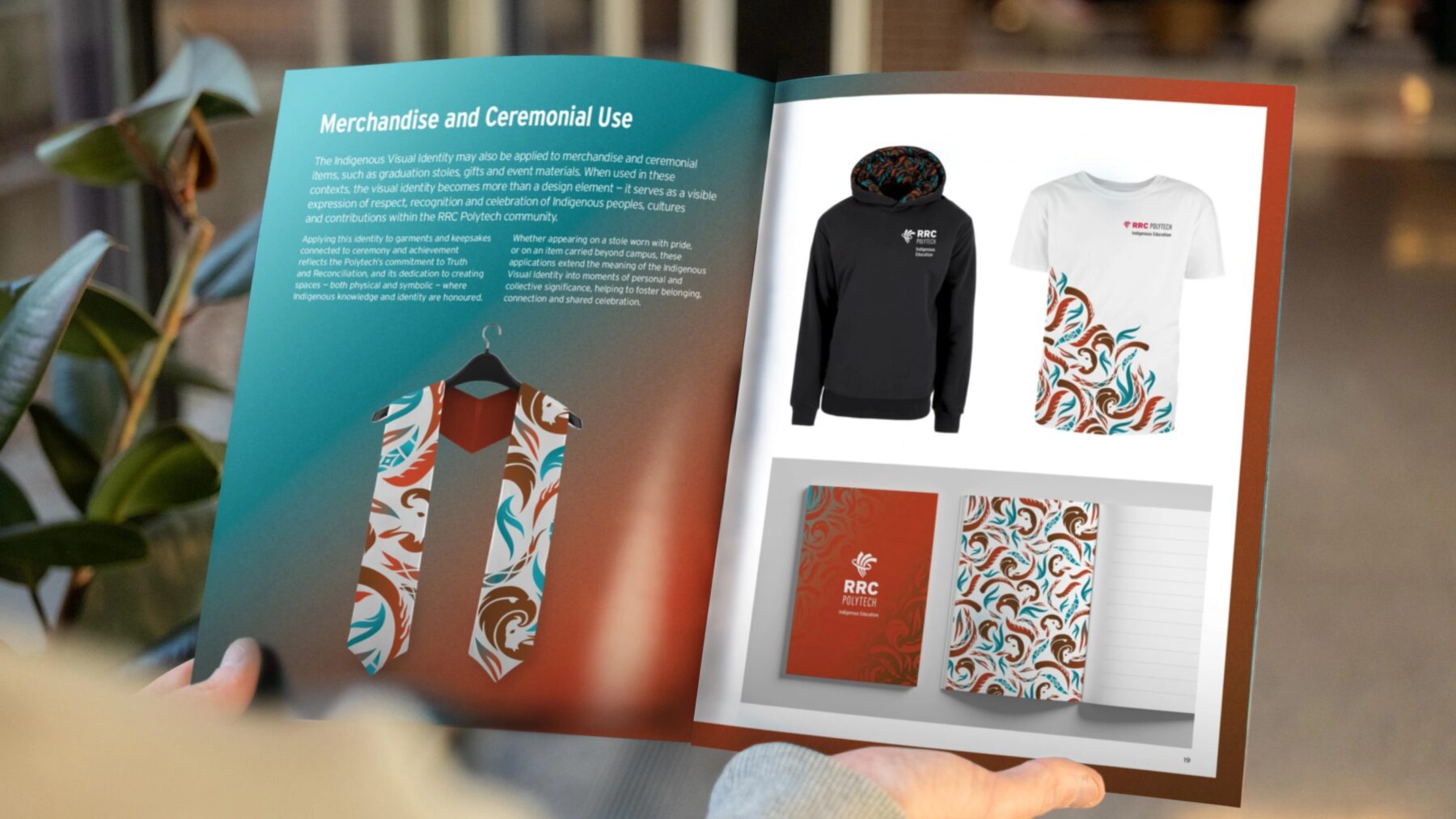
While close to 700 graduates will cross the stage at RRC Polytech’s Fall Convocation ceremonies later today, several of them will be wearing brand-new, meaningful stoles that reflect the voices, teachings and stories of Indigenous Peoples. 

The Polytech is officially unveiling its new Indigenous visual identity today – a project grounded in the institution’s commitment to Truth and Reconciliation, Indigenous student success, and shared values of respect, inclusion and belonging. 

“Celebrating our latest cohort of graduates is always an exciting, profound occasion,” says Fred Meier, President & CEO, RRC Polytech. “Today’s ceremonies will carry extra significance, as Indigenous graduates cross the stage wearing new stoles that honour tradition while embracing progress and change.” 

The stoles and new visual identity are the result of extensive conversations with Indigenous and non-Indigenous students, staff, Knowledge Keepers, Elders, and community partners, led by a steering committee made up of RRC Polytech staff and valued partners. 

“The design on these stoles is rooted in sacredness, seasonality, and interconnectedness, honouring the distinct identities of First Nations, Métis, and Inuit Peoples while weaving together themes of land, language, and story into a living expression of who we are,” says Carla Kematch, Director, Truth and Reconciliation and Community Engagement, RRC Polytech, and steering committee member. 

“The visual identity reflects teachings learned through engagement sessions and a survey that was shared among our community, ensuring that the design is a true reflection of an identity that belongs to all of us.” 

RRC Polytech convocation ceremonies 

Kate Rudnyk, a spring 2025 graduate from the Digital Media Design program, will be awarded the Lieutenant Governor’s Medal – the highest award that may be obtained upon graduation from RRC Polytech – at the Fall Convocation ceremony this afternoon. 

The recipients of these medals are selected by a standing committee comprised of representatives from Polytech management, students and instructors. This outstanding graduate has been selected in recognition of her academic and technical achievement, involvement in Polytech and/or community activities, and overall good character. 

Read more about the 2025 Lieutenant Governor’s Medal Recipient here. 

Convocation ceremonies will take place in-person at the RBC Convention Centre, Ozhaawashko-Giizhig (formerly known as the City View Room), 375 York Avenue, and live-streamed at rrc.ca/convocation

Tuesday, November 18 at 1:30 p.m. 

  • School of Business, Information Technology and Creative Arts 
  • School of Health Sciences and Community Services 
  • School of Hospitality and Culinary Arts 

Tuesday, November 18 at 7 p.m. 

  • School of Continuing Education 
  • School of Education, Arts and Sciences 
  • School of Indigenous Education 
  • School of Skilled Trades and Technology 

Close to 1,700 students are graduating this fall, with nearly 670 of them registered to attend their ceremony. 

RRC Polytech campuses are located on the lands of the Anishinaabeg, Ininiwak, Anishininwak, Dakota Oyate, and Denésuline, and the National Homeland of the Red River Métis.

We recognize and honour Treaty 3 Territory Shoal Lake 40 First Nation, the source of Winnipeg’s clean drinking water. In addition, we acknowledge Treaty Territories which provide us with access to electricity we use in both our personal and professional lives.